October 01, 2026
Chestnuts and coffee have shared a table in Italy for a long time. They come out of the same autumn basket, get roasted over the same fire, and end up beside the same small cup. Pairing them well is not complicated, but it is not accidental either. A chestnut is starchy, low in acid, gently sweet and slightly drying on the finish. Coffee is none of those things. So the question at each tasting is simple: do you want the coffee to soften the chestnut, the chestnut to round off the coffee, or the two to sit side by side and disagree pleasantly? Once you know which of those you are after, the choice of roast and brew becomes much easier.
Why Chestnuts and Coffee Get Along
Most of the work is done by texture and weight. Chestnuts — especially when boiled or worked into a paste — leave a soft, floury coating on the palate. That coating tends to mute whatever comes next, which is why a thin, delicate coffee can disappear entirely after a mouthful of chestnut. A coffee with a bit more body cuts through the coating instead of hiding behind it.
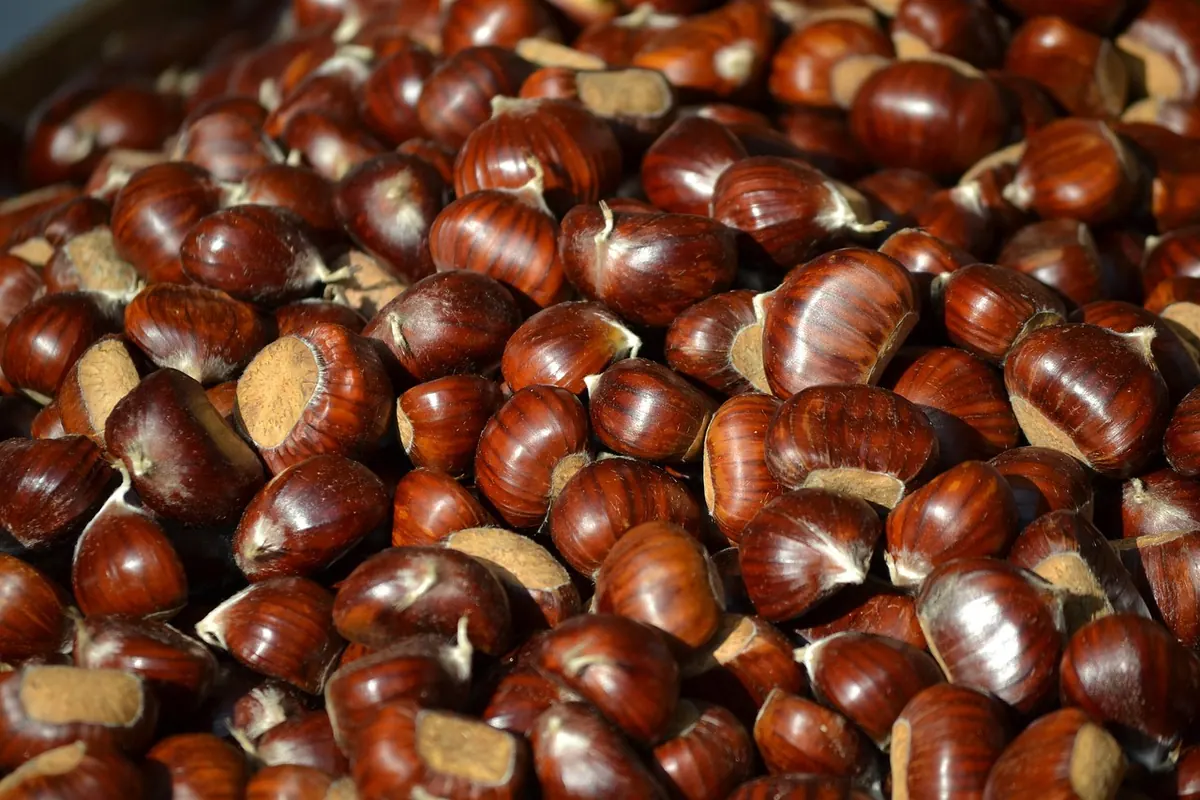
Flavour-wise, the two have real common ground. Chestnuts taste of toasted bread, hazelnut skin, warm starch and a faint sweetness that sits closer to potato than to fruit. Those notes overlap neatly with coffees from Brazil and much of Central America, and with the maltier side of Ethiopian naturals. The one part of the chestnut that fights back is the thin brown skin, or pellicle, which carries a mild tannic bitterness. That bitterness is useful: it gives the coffee something to push against. It becomes a problem only when both sides are bitter at once.
Start with the Chestnut, Not the Coffee
Before you grind anything, decide which chestnut you are serving. The three common forms behave quite differently, and each one pulls the pairing in its own direction.
Roasted chestnuts
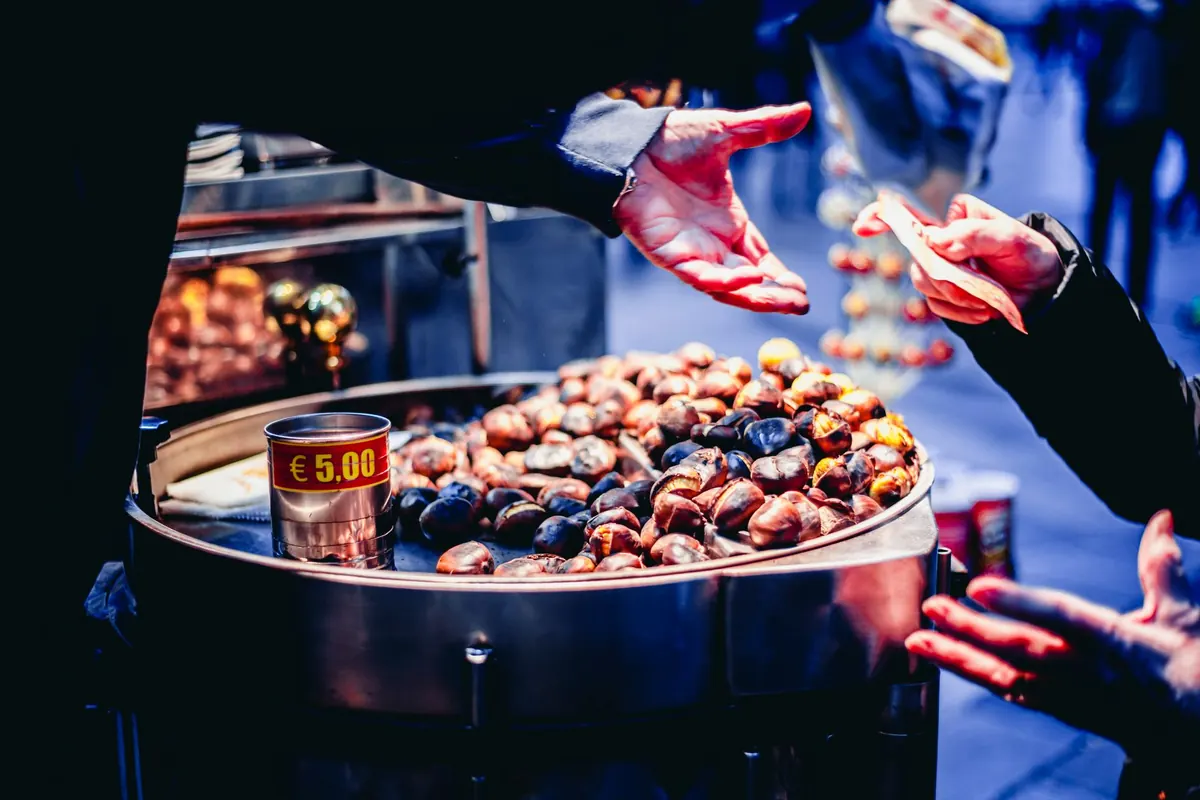
Roasting drives off water, caramelises the surface and adds a smoky, faintly charred edge. The result is drier and more intense than a boiled chestnut, with a finish that can feel almost savoury. Pair these with a coffee that has enough body and sweetness to hold its own — a medium roast with nutty, cocoa-ish notes works well. A very light, floral coffee tends to get flattened by the smoke, and a very dark roast doubles down on bitterness until the whole mouthful tastes like ash.
Boiled chestnuts
Boiled chestnuts are moister, milder and starchier. They taste of boiled grain and sweet chestnut flesh, with none of the char. Because they are so gentle, they are the one case where a lighter, cleaner coffee is clearly the better choice: a washed Central American or a light-medium roast with a little brightness will lift the chestnut rather than bury it. Serve them warm, not hot, and salt them lightly — a pinch of salt makes the chestnut's own sweetness legible and stops you over-sweetening the coffee to compensate.
Sweetened chestnuts
Marrons glacés, chestnut cream, honey-glazed chestnuts, chestnut jam on toast: sugar changes the maths completely. Sugar amplifies the perception of bitterness and acidity in coffee, so a thin, sharp brew suddenly tastes thinner and sharper. You have two sensible routes. One is to echo the sweetness with a darker, chocolatey roast, which turns the pairing into something close to a dessert. The other is to cut it with a bright, clean filter coffee, which refreshes the palate between bites. What rarely works is a very dark, very bitter espresso alongside a very sweet chestnut — the two extremes cancel each other out rather than balancing.
Match the Roast Level to the Plate
Roast level matters more than origin here, especially at the beginning. As a working rule:
- Light roasts suit boiled chestnuts and any dish where chestnut is a background ingredient. Expect fruit and acidity; keep the cup small.
- Medium roasts are the safest all-rounder. Nut, caramel and cocoa notes sit naturally next to roasted chestnuts, and the acidity is low enough not to clash.
- Dark roasts belong with sweetened chestnuts, chestnut desserts and anything with cream or butter. Bitterness balances sugar; smokiness echoes caramelisation.
If you only keep one bag at home, make it a medium. It flatters roasted and boiled chestnuts both, and it survives a chestnut dessert without turning harsh.
Brew Styles and What They Do to the Pairing
Espresso and moka
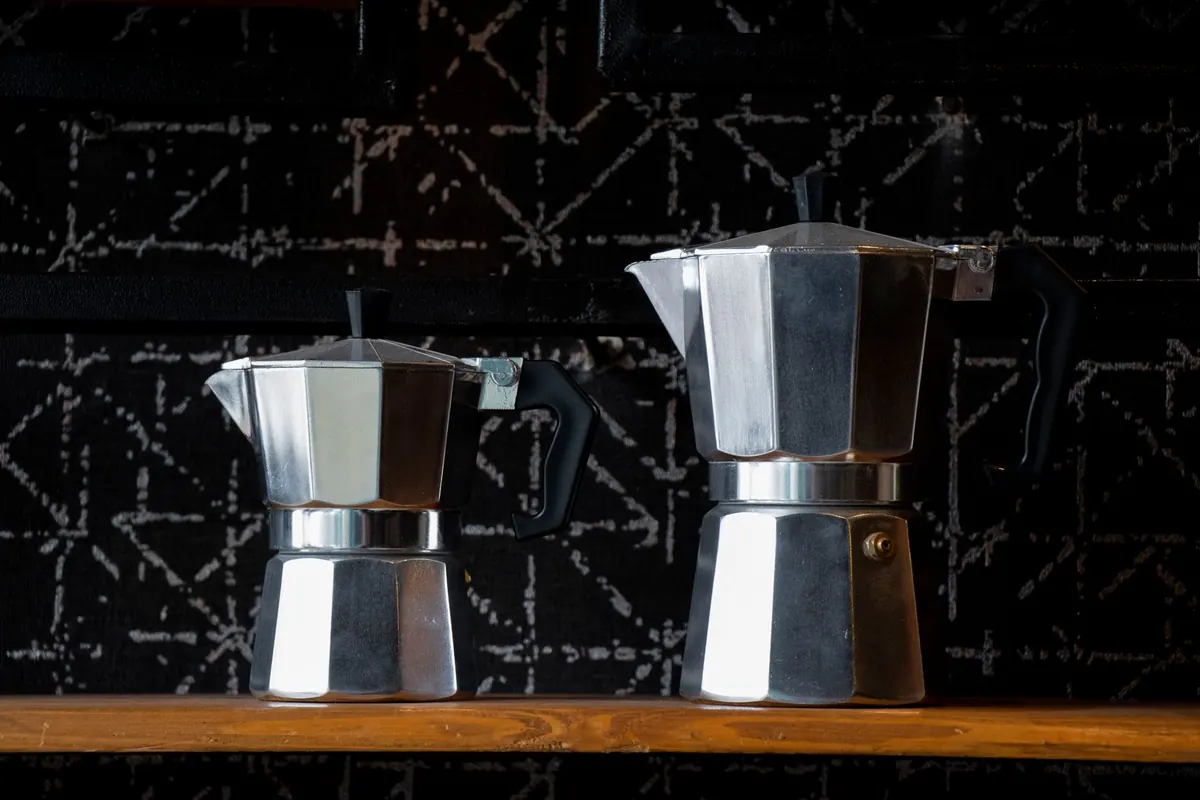
Concentrated, syrupy and intense, espresso has the body to stand up to roasted chestnuts and the sweetness to handle chestnut cream. Keep the shot short and slightly under-extracted rather than long and bitter. The moka pot works on the same logic: a full, heavyset brew that benefits from being poured a little before the final sputtering stage. With boiled chestnuts, moka coffee is usually too much — dilute it with hot water to make an americano and the balance improves immediately.
Filter and pour-over
Filter coffee gives you clarity and length, which is exactly what delicate chestnuts need. Use water just off the boil, somewhere around 92–96°C, a medium grind, and a ratio near 60 g per litre. A clean, medium-bodied filter cup is the best partner for boiled chestnuts and the best palate-cleanser after sweet ones.
French press and immersion
Full-bodied and low in acidity, immersion brews sit comfortably between espresso and filter. They suit roasted chestnuts in a rustic, unshowy way, especially with a coarse grind and a four-minute steep. Don't over-stir; the silt that comes through can make a starchy mouthful feel muddier than it needs to.
Milk drinks and cold brew
Milk softens acidity and adds fat, which is why a cappuccino or a flat white works so well with chestnut cream and marrons glacés — it turns the pairing into something closer to dessert. Cold brew is the summer option: low bitterness, high body, and a natural sweetness that flatters honey-glazed chestnuts. It's also forgiving if your chestnuts are a day past their best.
A Simple Tasting Setup for Two or Three People
You don't need a formal cupping table. An hour, a small saucepan and a few cups will do.
- Choose one chestnut type only. Boiled is the easiest starting point.
- Prepare two coffees at the same strength — say a medium roast and a dark roast — using the same brew method and the same dose.
- Warm the chestnuts and keep them plain, with no sugar and only a little salt.
- Taste a chestnut alone first. Note how dry or sweet the finish is.
- Taste each coffee alone, in small sips.
- Now taste chestnut, then coffee, then a second sip of coffee while the chestnut is still on the palate. That third sip is where the pairing actually shows itself.
- Clean the palate with water and plain bread between rounds — not with sugar, which will skew everything that follows.
Common Mistakes and Quick Fixes
- Coffee too hot. Above about 70°C it scalds the palate and you taste nothing but heat. Let the cup rest a minute.
- Chestnuts cold. Cold starch reads as dry and pasty. Warm them through, even briefly in a dry pan.
- Too much sugar. Sweeten the coffee only after you've tasted the pair. Usually you need less than you think.
- Over-milking. A large milky drink can drown both; keep milk-based pairings small.
- Bitter plus bitter. If the mouthful turns drying and harsh, the roast is too dark for that chestnut — drop one level, not the chestnut.
Where to Start Tonight
Pick one combination and try it before you build a whole tasting around it. Roasted chestnuts with a medium-roast moka coffee is the most forgiving introduction, and it's the one most likely to convince you the pairing is worth repeating. Boiled chestnuts with a light filter brew is the more delicate, more surprising version. Sweetened chestnuts with a short dark espresso is the dessert.
Keep the portions small, keep the chestnuts warm, and taste the coffee on its own before you commit the mouthful. Three small cups will teach you more about your own preferences than any set of rules — including these.
Photo: Francesco Paggiaro / Pexels