October 28, 2026
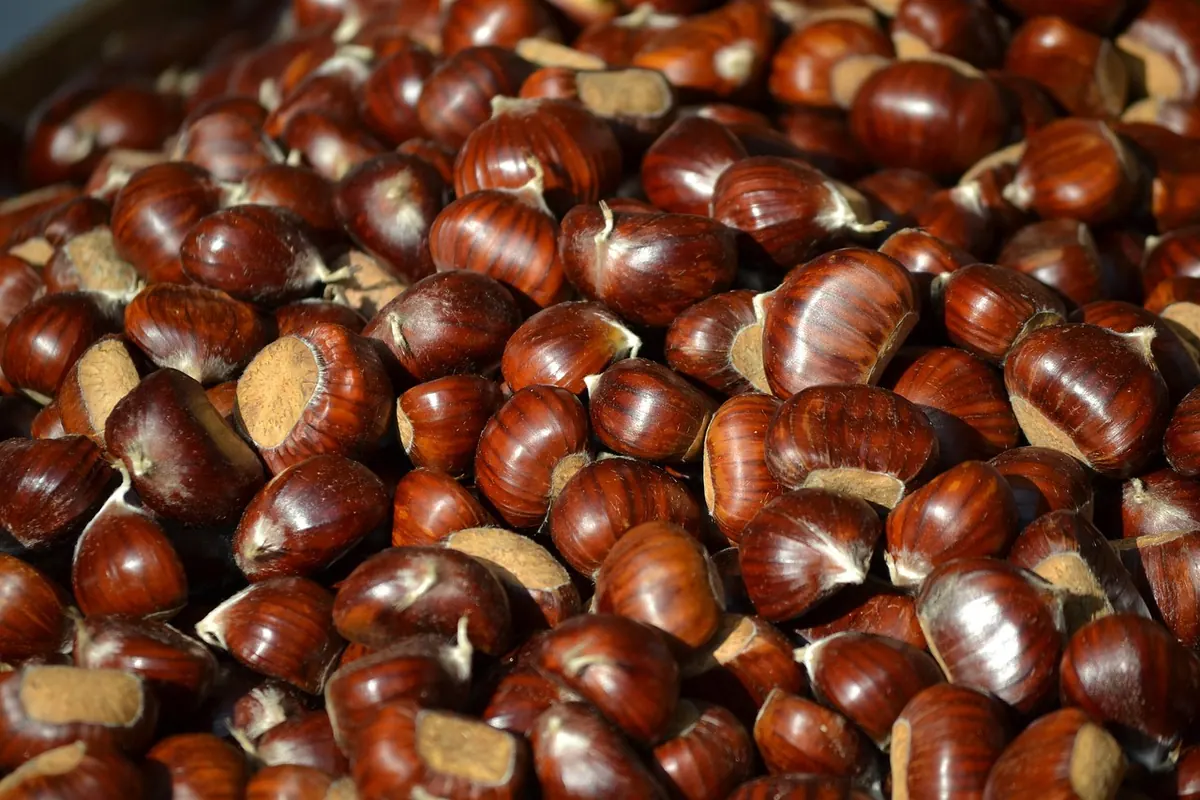
The first genuinely cold morning usually does it. Overnight, the stall that sold peaches in August is stacked with burlap sacks, a chalkboard appears with a single word on it, and the smell shifts from ripe fruit to something earthier. Chestnut season arrives quickly, and it leaves quickly too. If you have ever bought a kilo on impulse and found half of them hollow a week later, you already know the gap between a handsome display and a good one. Buying well is mostly a matter of checking the right details at the right moment.
The Season Has a Shape
Chestnut harvest in Italy generally runs from late September into November, and later still on higher ground, where the cold comes earlier and the nuts ripen more slowly. That rough arc is worth keeping in mind, because what sits in the baskets in early October is not what sits there in mid-November.
The first arrivals tend to come from lower altitudes: smaller nuts, often sold loose and cheap, good for roasting at home or for flour. As the season moves on, the marroni type appears, with larger, glossier nuts and a sweeter, less bitter flavour. By the time the mountain harvest is in, you are usually looking at the best-keeping chestnuts of the year.
Local markets follow the harvest, not the calendar. Two towns twenty minutes apart can be a fortnight out of step, and the same stall can be selling this morning's delivery next to last week's leftovers. That is why the single most useful question at any chestnut stall is a plain one: when did this load arrive? A seller who answers without hesitation and points to the sacks behind them is a seller worth buying from.
Read the Shell Before Anything Else
The shell is the only part of a chestnut you can properly inspect, so give it your full attention. Look for a deep, even colour — mahogany, reddish-brown, chestnut brown — with a natural sheen. Not oiled, not polished, just the soft glow of a nut that has been handled gently and has not sat around losing moisture.
Look at the base, where the pale scar sits. On a fresh chestnut it is small, clean and firm-looking. If it is shrivelled, or if the base looks hollow and open, the nut has been drying for a while. Run your thumb over the shell: it should feel tight and smooth, with no give and no fine wrinkles. A wrinkled shell means the kernel inside has already begun to shrink away.
Signs to Put Them Back
- Pin holes. Small, perfectly round holes of a millimetre or two mean insects have found the nut before you did.
- Fine powder. A dusting of white or grey at the bottom of the sack is a warning, not a decoration.
- Cracked or split shells with dark edges around the break.
- A shell that gives under light thumb pressure — it should feel like thin wood, not paper.
- Fuzz or soft dark patches, particularly near the tip.
One caveat: some local varieties are naturally less glossy than the polished marroni in the supermarket. Judge the batch as a whole and compare a few nuts against each other rather than holding every chestnut to a single standard.
Weight, Ring, and Rattle
Pick up a chestnut and weigh it in your palm. It should feel heavier than it looks — dense, solid, slightly cold. Chestnuts are mostly water when fresh, which is exactly why they spoil faster than other nuts and why weight is such a reliable signal. A kilo of good chestnuts looks like a surprisingly small pile.
Shake one close to your ear. Silence is what you want. A faint rattle means the kernel has dried and pulled away from the shell; the nut will be hard to peel and disappointing to eat. Press a fingernail gently into the shell near the tip — you should meet resistance, not a soft spot.
At home, the old kitchen test still works well. Drop the chestnuts into a bowl of cold water. Fresh, sound nuts sink. The ones that float have lost too much moisture or have been hollowed out, and they should be discarded rather than cooked with the rest.
Freshness Is Also About the Stall
How chestnuts are displayed tells you a great deal about how they have been kept. Open baskets, wooden crates and breathable sacks are good signs. Sealed plastic bins are not: chestnuts sweat, and trapped moisture invites mould within days. If the inside of the container looks damp or the nuts feel clammy, walk on.
Smell the air above the stall. Fresh chestnuts smell faintly of cold earth and dry leaves. A sour, musty or fermented note means the stock has been sitting too long, whatever the shells look like.
Buy a small bag first. Roast a dozen that evening, and let the nuts tell you whether the stall deserves your money for the rest of the season.
Three questions worth asking, in this order:
- When was this delivered, and is there more from the same load?
- Which variety is this, and roughly where was it grown?
- How long would you keep these at home before cooking them?
A vendor who roasts on site is also a useful gauge. If the roasted chestnuts are sweet and peel cleanly, the raw ones behind the counter are probably in good shape too.
Timing Your Market Visit
Mornings are best. Stalls are tidy, the sacks have just been opened, and you are not picking through a pile that forty other people have handled. Mid-week is quieter than Saturday, though some sellers restock on Friday precisely for the weekend crowd — so if the bins look tired on a Wednesday, ask when the next delivery is due and come back.
Late afternoon has its own logic. Prices sometimes soften near closing, but the best nuts are usually gone and the remainder has been turned over by many hands. If you do buy late, inspect twice as carefully.
The same applies to festivals and chestnut fairs. They are wonderful for atmosphere and for tasting, but the volume of people means stock moves fast and quality can vary from sack to sack. Buy from the stall with the shortest queue and the freshest-looking pile, not the one with the longest queue and the loudest sign.
Sorting and Storing What You Bring Home
Tip the bag out onto a tray as soon as you get in. Spread the chestnuts in a single layer, remove anything cracked or suspicious, and leave them somewhere cool and airy overnight. Do not seal them in a plastic bag; a paper sack, a wicker basket or a cotton tote will do.
Eat or cook them within a few days for the best flavour. For longer keeping, store them in the refrigerator in a paper bag with a few holes punched in it, or freeze them — peeled and blanched, or simply scored and roasted first. Check the tray again after two or three days: weevil holes often only show up once the nuts have been sitting in the warm, which is another reason not to buy more than you can use in a fortnight.
And when you do cook them, score the shell deeply across the rounded side. It takes ten seconds per nut and saves you from the small fireworks that happen when a chestnut bursts in a hot pan.
A Short Checklist for Market Morning
- Ask when the current load arrived.
- Pick up six or seven nuts and feel for density.
- Check the base scar and the tip for holes or softness.
- Shake one — listen for silence, not a rattle.
- Smell the stall: earth and leaves, never sourness.
- Look at how the nuts are stored — breathable, not sealed.
- Buy a small bag first, then return for bulk.
None of this takes more than a couple of minutes, and it turns an impulse purchase into something you can plan a meal around. The season is short. Learn your stall, learn its rhythm, and the chestnuts you carry home in November will taste like the cold morning you bought them on.
Photo: FilieraSi / Pixabay