October 05, 2026
Roasting chestnuts at home is one of those small kitchen projects that rewards attention more than equipment. You need a sharp knife, a heat source, and a willingness to check the nuts often. The differences between oven, pan, and fire are real, though. Each method pushes the chestnut toward a different balance of steam, browning, and smoke, and each asks something different of the cook.
What follows is a practical comparison, not a rulebook. Chestnut size, freshness, and the heat of your oven or fire will shift the numbers. Treat the timings as starting points and learn the cues: a shell that curls open, a nut that yields when pressed, a smell that moves from raw and starchy to sweet and toasted.
Start Here: Score, Soak, and Steam
Before any method, score every chestnut. This is not cosmetic. An unscored chestnut can burst in the heat, and the sound is not pleasant. Use a small sharp knife to cut a shallow line across the rounded side of the shell, through the outer skin but not deep into the flesh. A cross cut works too, especially for larger nuts.
Soaking is optional. Some cooks soak chestnuts for twenty to thirty minutes to soften the shell and encourage steam inside. If you soak, drain and dry them well before roasting; wet shells on a hot pan will spit and steam unevenly. I usually skip the soak for oven roasting and use it when I want the shells to open more readily over fire.
- Score first, always. Cut through the shell, not deeply into the nut.
- Dry the surface if you soaked them, so they brown rather than steam.
- Work in a single layer. Crowding traps moisture and creates pale, uneven nuts.
- Rest before peeling. Wrap hot chestnuts in a clean towel for five minutes; the steam loosens the shell and inner skin.
Oven Method: The Reliable Default
Oven roasting is the method I recommend to anyone roasting a large batch for the first time. It is forgiving, you can walk away for a few minutes, and the results are consistent. Heat the oven to about 200°C to 220°C, or 400°F to 425°F. Spread the scored chestnuts on a baking sheet in a single layer, cut side up if the cuts are on one side.
Roast for twenty to thirty minutes, shaking the tray once halfway through. Small chestnuts may be ready closer to twenty minutes; large, fresh ones can take closer to thirty. The cue is a shell that has opened and curled back, with the flesh beneath tender when you test one with a knife. If the flesh still resists, give them another five minutes and check again.
Texture and flavor
Oven-roasted chestnuts come out fluffy and moist, with a clean sweet-nut flavor. They brown at the edges but rarely take on much char. That makes them excellent for peeling in quantity, folding into stuffing, or serving simply with butter and salt. The trade-off is a gentler roast; if you want smoke or deep caramelized spots, the oven will not give it to you without drying the nuts out.
Stovetop Pan Method: Small Batches, Deep Color
A heavy skillet or cast-iron pan gives you more control and more color. Set it over medium-low heat, add a single layer of scored chestnuts, and cover with a lid. Shake the pan every two or three minutes so the nuts turn and the steam distributes. Expect fifteen to twenty-five minutes, depending on size and pan heat.
The lid matters. It traps steam early, helping the flesh cook through, while the hot pan browns the shells. In the last few minutes, uncover the pan and keep shaking so the chestnuts pick up deeper color without scorching. Keep the heat moderate. A pan that is too hot will blacken the shells before the insides are done.
Texture and flavor
Pan-roasted chestnuts are slightly firmer than oven-roasted ones, with a more concentrated roasted flavor and darker patches where the shell met the pan. They feel a little more “cooked at home” in the best sense. This is my preferred method for a small batch on a cool evening, when I want a dozen chestnuts and a cup of coffee rather than a tray for a crowd.
Open Fire Method: Smoke, Char, and Theatre
Fire roasting is the most atmospheric and the least predictable. Work outdoors or in a well-ventilated space, never over an indoor flame without proper ventilation. Wait until the fire has burned down to hot coals rather than leaping flames. Use a long-handled chestnut roaster with holes, or a heavy skillet set on a grate over the coals.
Score the chestnuts, add them in a single layer, and toss every minute or two. They usually take ten to twenty minutes over steady coals, but wind, coal temperature, and nut size make exact timing impossible. Pull one out and test it. When the shell curls and the flesh is tender, move the batch to a towel-lined bowl. Wear gloves, keep long utensils handy, and keep children and loose clothing away from the fire.
Texture and flavor
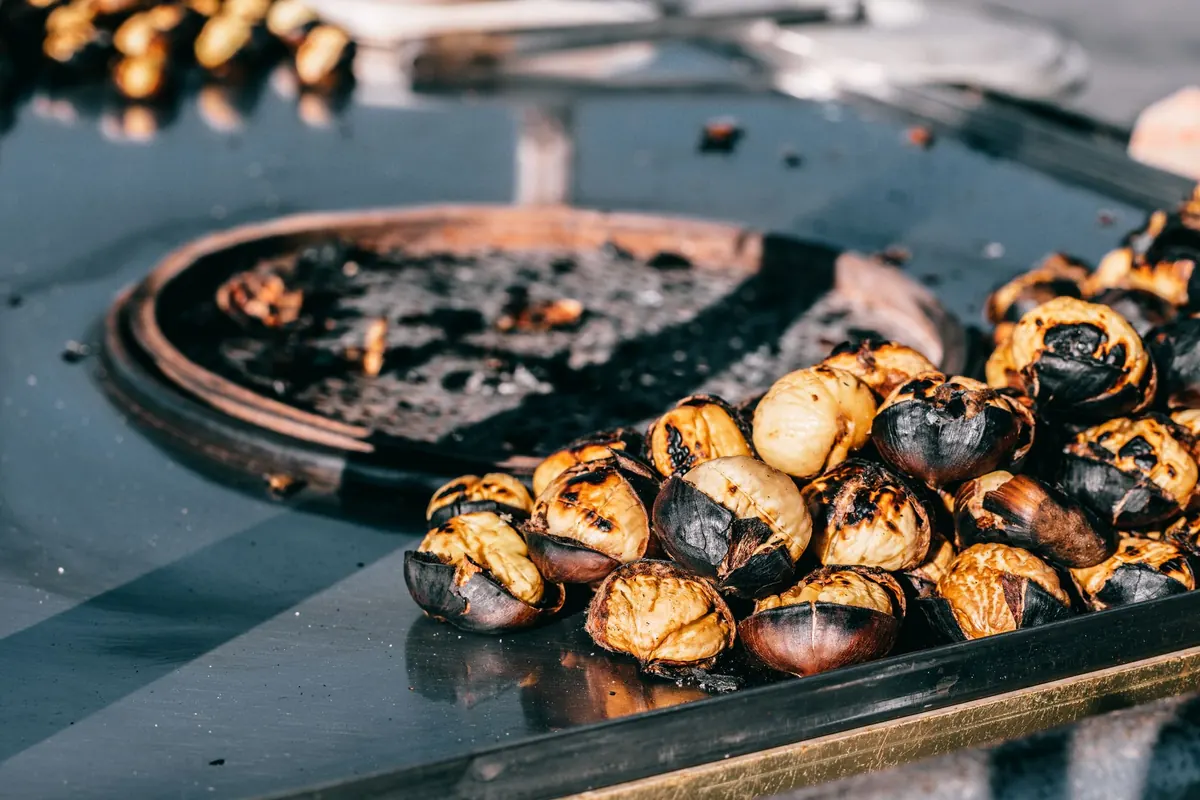
Fire-roasted chestnuts are smoky, sweet, and a little wild. The texture can be uneven because the nuts closest to the coals finish first; sort them as you go. Some shells will char, which is fine, but bitter black patches on the flesh are not. This method suits an outdoor gathering, a backyard fire, or a cool-weather ritual when the smoke is part of the point.
Side-by-Side: Timing, Texture, Flavor
- Timing: oven, twenty to thirty minutes; pan, fifteen to twenty-five minutes with shaking; fire, ten to twenty minutes with near-constant attention.
- Texture: oven gives the most even, fluffy result; pan gives a firmer, more roasted bite; fire gives a varied texture with smoky edges.
- Flavor: oven is clean and sweet; pan is deeper and more caramelized; fire is smoky and charred in places.
- Best for: oven for large batches and beginners; pan for small batches and control; fire for outdoor cooking and atmosphere.
- Main risk: oven drying the nuts; pan scorching the shells; fire burning them unevenly.
Whichever method you choose, peel the chestnuts while they are still warm. The inner skin comes away more easily then, and the flesh stays intact. Serve them with a medium-roast coffee that has nutty or caramel notes; the coffee’s sweetness flatters the chestnut without overwhelming it.
A Simple First Roast and a Few Last Checks
If you are new to this, start with the oven. Score a pound of chestnuts, spread them on a tray, and roast at 200°C for about twenty-five minutes, shaking once. Wrap them in a towel for five minutes, then peel and taste. That baseline will tell you more than any chart. Once you know how your oven behaves, try the pan for a smaller batch and compare the color and texture. Save the fire for a day when you have time, good coals, and company.
Buy chestnuts that feel heavy for their size and have no soft spots or mold. Fresh chestnuts are perishable; keep them refrigerated and use them reasonably soon. If a nut smells sour or tastes bitter, discard it. And remember that hot chestnuts hold steam, so give them that short rest before peeling. The difference between a good batch and a frustrating one is often just five minutes under a towel.
Photo: Meruyert Gonullu / Pexels